Dog training
How to stop puppy biting
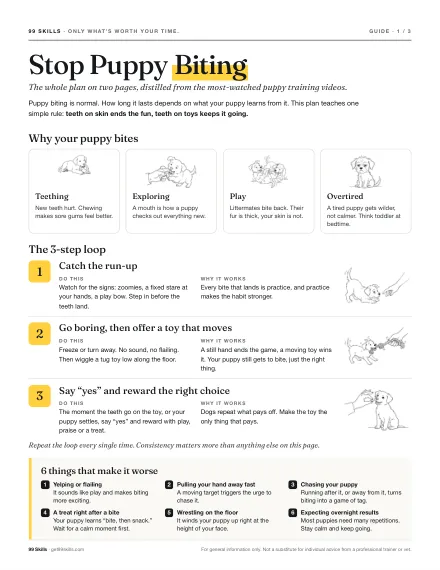
Puppy biting is normal, and it fades fastest when one rule never changes: teeth on skin ends the fun, teeth on toys keeps it going. Here’s the 3-step loop that teaches it, distilled from the most-watched puppy training videos.
163 videos screened, 7 trainers compared
8 hours of top-rated videos you can skip
Launch price · €14 from December 1 · incl. VAT

Why your puppy bites
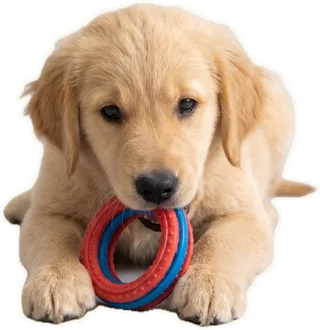
Teething
New teeth hurt. Chewing makes sore gums feel better.
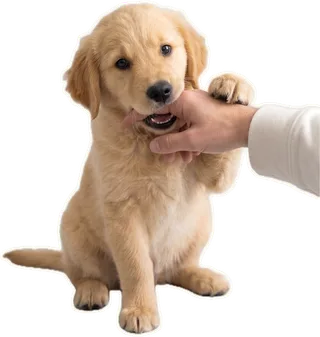
Exploring
A mouth is how a puppy checks out everything new.
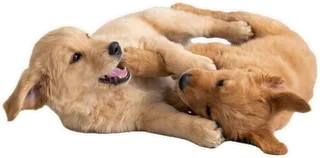
Play
Littermates bite back. Their fur is thick, your skin is not.

Overtired
A tired puppy gets wilder, not calmer. Think toddler at bedtime.
The 3-step loop
Catch the run-up
Zoomies, a fixed stare at your hands, a play bow: step in before the teeth land.

Go boring, then offer a toy that moves
Freeze or turn away, no sound, no flailing. Then wiggle a tug toy low along the floor.
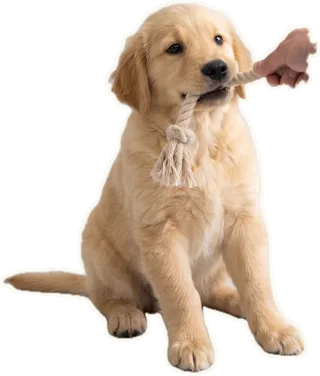
Say “yes” and reward the right choice
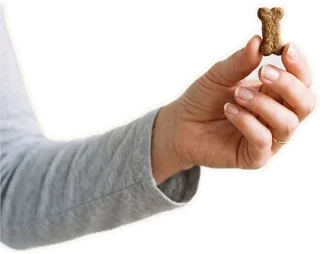
The moment the teeth go on the toy, say “yes” and reward with play, praise or a treat.
Repeat the loop every single time. Consistency matters more than anything else.
6 things that make it worse
- Yelping or flailing
- Pulling your hand away fast
- Chasing your puppy
- A treat right after a bite
- Wrestling on the floor
- Expecting overnight results
The full plan
Stop Puppy Biting
The one-page plan + 7-day bite log
163 videos screened, 7 trainers compared
8 hours of top-rated videos you can skip
- The 3-step loop: catch the run-up · go boring, then offer a toy that moves · say “yes” and reward the right choice
- 6 things that make it worse
- A daily setup: naps, short training, brain work, house line
- The collar-grab game
- What to expect, from the 8–14 week peak to the first changes
- When to get help
- 2 fridge cards to stick on the fridge
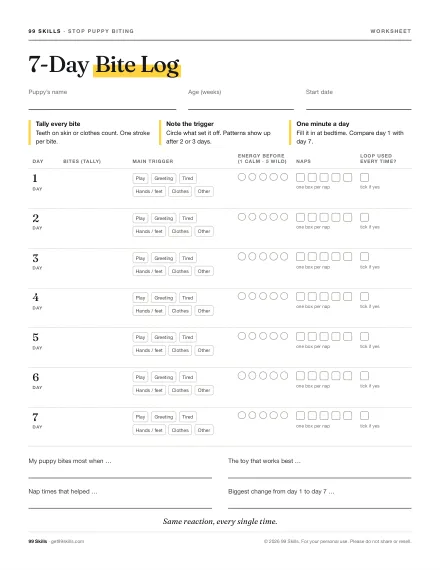
- A printable 7-day bite log
4 pages · PDF · US Letter + A4
30-day money-back guarantee · Instant PDF download

Questions
When does puppy biting stop?
Biting peaks between 8 and 14 weeks. First changes show in the first days when everyone reacts the same way, every time, with fewer and softer bites over the next weeks. Teething can bring a short comeback of chewing up to 5 to 7 months.
Is my puppy being aggressive?
Usually not. Puppies bite to play, to explore and to soothe sore gums. Get help from a certified, reward-based trainer or your vet if biting comes with growling, a stiff body or guarding of food or toys, if it gets worse after a few weeks of consistent practice, or if your puppy is older than six months and still bites hard.
Should I yelp when my puppy bites?
No. Yelping or flailing sounds like play and makes biting more exciting. Freeze or turn away instead, then offer a toy that moves.
Is this for my 8-week-old puppy?
Yes. The plan is written for the peak biting phase from 8 to 14 weeks. If your puppy is older than six months and still bites hard, a certified, reward-based trainer can check what is going on.
What exactly do I get?
A 4-page PDF in US Letter and A4: the full plan with the daily setup, the collar-grab game and a timeline, two fridge cards and a printable 7-day bite log.
What if it doesn’t work for us?
You’re covered by a 30-day money-back guarantee. Get in touch within 30 days and you get your money back, no questions asked.
Teeth on toys, not on you.
The whole plan, the fridge cards and the 7-day bite log. Print it, stick it up, start tonight.
Launch price · €14 from December 1 · incl. VAT
For general information only. Not a substitute for individual advice from a professional trainer or vet.